

Make the most of your mattress
A well-cared-for mattress should give you a good night’s sleep for years and years to come.
How to care for a new mattress
A good care routine for your mattress begins from the moment it arrives, so here are some top tips to look after your new mattress right from the get-go:
All mattresses should be left to air for a few hours after unpacking. If your mattress arrives rolled, it needs unpacking within one month. It will then need six hours to expand before it can be slept on and may take up to 72 hours to be at its full size. Never try to re-roll or bend your mattress. A rolled mattress should be unpacked in a clear area free of children, obstructions or pets as it could spring out of the polythene during opening.
Once unpacked, the mattress will need time to expand. You should allow at least six hours before sleeping on it, although it can take up to 72 hours to fully recover its original shape and firmness.
If your mattress arrived rolled, this process was carried out by a specialist machine. You should never attempt to bend or re-roll the mattress yourself, as this can damage the internal structure and springs. While it is fine to transport a mattress on its side for short periods, it should always be stored flat for longer durations. Storing a mattress on its side for too long can cause permanent damage, so be sure to lay it flat as soon as possible after delivery.
Some foam mattresses may have a slightly unusual smell when first unpacked. This is normal and will fade after a few days once the mattress is out of its packaging. To help speed this up, keep the room well-ventilated and occasionally loosen or remove bedding during the first few days to allow the mattress to breathe.
Heavier mattresses, such as those in the Dorma and Hotel ranges, may require two or more people to move safely. If you're not planning to use your mattress straight away, avoid storing it in damp or humid places like sheds or garages as this can lead to mould or unpleasant odours. For best results, we recommend arranging delivery closer to when you intend to use the mattress.
Finally, mattresses containing natural fillings may take a little time to settle. This is completely normal and simply reflects the mattress adjusting to your body over the initial period of use.
How to rotate and flip your mattress
Over time, mattresses will settle in areas where your body presses into the surface, such as where your shoulders and bottom rest. This is natural, however, you can manage this by regularly rotating and/or flipping your mattress to spread out wear.

 All mattresses can be rotated, however only dual-sided mattresses can be flipped, so you first need to understand the type of mattress you have bought. Look at the product label to confirm.
How often should you flip or rotate your mattress?
We recommend for the first 3 months you flip and/or rotate your mattress every 2-4 weeks. After that, we recommend flipping and / or rotating every 3 months until you decide to replace. If your mattress can be flipped and rotated (if it is dual-sided) do both at the same time. Most of our mattresses have side handles to help make this task easy, however they are not designed to hold the weight of the mattress for long periods of time. Some of our heavier mattresses such as our Dorma and Hotel range will require 2 people to move.
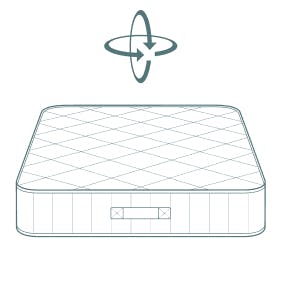
How to flip a dual-sided mattress:
This type of mattress is the same on both sides, which means you should flip as well as rotate the mattress to even out wear. We recommend doing both at the same time, so you will rotate the head of the mattress to the foot of the bed as well as flip the mattress to the opposite side.
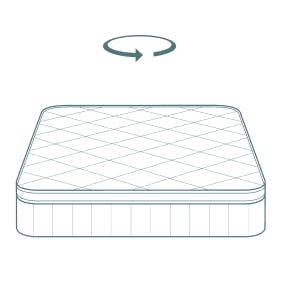
SHOP OUR DUAL-SIDED MATTRESSES HEREHow to rotate a single-sided mattress:
These types of mattresses are different on both sides, meaning they are designed to be slept on one side only and shouldn’t be flipped. However, you can still rotate them to even out wear. This will mean the head of the mattress will be rotated to the foot of the bed and vice versa.
SHOP OUR SINGLE-SIDED & PILLOW-TOP MATTRESSES HERE
How to clean your mattress
In addition to washing bedding and using a mattress protector, we advise cleaning your mattress every 6 months. Here are some general dos and don’ts, however please follow the specific care instructions provided with your mattress:
Do Don't Airing Leave your mattress fully undressed for around an hour when changing bedding to allow the mattress to breathe Remove your mattress cover, unless otherwise stated on the care label Cleaning Clean the surface of the mattress and bedding to remove allergens and dirt which has built up Use detergents or chemical cleaners on your mattress, as this may damage the fabric and stitching Stain removal Spot-clean any stains with soapy lukewarm water Wait for spills and accidents to dry before cleaning them – address them as soon as possible to avoid the fibres soaking up more of the stain Drying After spot-cleaning, leave your bedding pulled back for a couple of hours daily to allow the mattress to fully dry Scrub or oversaturate the area you are spot-cleaning
How to care for your bedding
Bedding naturally collects sweat, dirt and allergens such as dust mites and if kept on your mattress for too long, these can seep into it. To help keep your mattress clean, we recommend cleaning your sheets and pillowcases every 1-2 weeks. Bedding items such as duvets and pillows, that don't come into contact with your body, can be washed less regularly, however we still recommend washing them every couple of months.
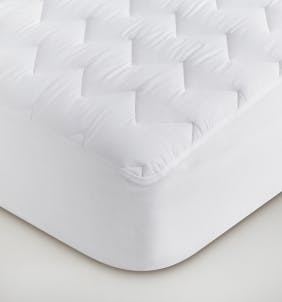
Mattress protectors are also a great way to keep your mattress clean and fresh. Protectors shield against dirt and spills, and some can also provide additional benefits such as water resistance, added comfort or cooling technology and/or anti-allergy. It is much easier and cheaper to wash or replace a mattress protector than your mattress, so ensure you invest in one to help prolong your mattress' lifespan.
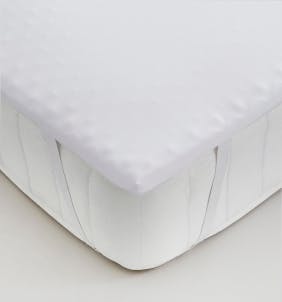
💡 TOP TIPMattress protectors are different to Mattress toppers as their main purpose is to protect your mattress, whereas toppers are more for comfort reasons. Toppers however do cover your mattress, so will offer some form of protection, so better than using nothing.
Which bed frame is best for your mattress?
You might not realise it, but your bed frame will affect the performance and durability of your mattress. You might not realise it, but your bed frame will affect the performance and durability of your mattress. Solid divan bases will maximise the performance of your mattresses, allowing you to get the most out of its support and comfort as they prevent uneven distribution.
However, divan bases don't allow air around your mattress which will reduce breathability and could lead to you feeling hotter. Slitted beds are the most popular frame type, and these are fine to use with most mattresses as well, however you must be mindful of the distance between each slat and ensure it is not greater than 70mm and that the slats themselves are at least 10cm wide. Our heavier mattresses like Dorma and Hotel also require a divan, sturdy frame with extra leg support or a solid slat frame.
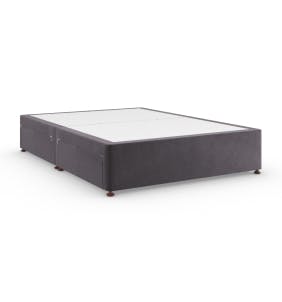
Divan bases
Solid divan bases will maximise the performance of your mattress, allowing you to get the most out of its support and comfort as they prevent uneven distribution. However, divan bases don’t allow airflow around your mattress which will reduce breathability and could lead to you feeling hotter.
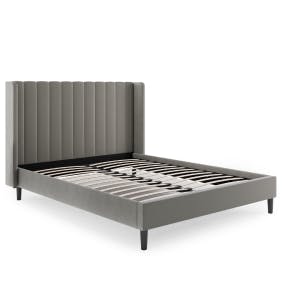
SHOP DIVAN BEDSSlat frames
This type of bed frame is the most popular and is fine to be used with most types of mattress. They allow airflow under the mattress for breathability and sprung slat frames have a more reactive and bouncier base which works with the mattress to offer extra support and comfort. Always ensure the gap between each slat is not greater than 70mm and that the slats themselves are at least 10cm wide or the performance and durability of your mattress will be affected.
SHOP SLATTED BED FRAMES
Unsure on what bed to buy for your new mattress?
Take a look at our
BED BUYING GUIDE
How to keep your mattress fresh
A good bedding routine is the best way to keep your mattress fresh and performing at its best. Here are our top tips to keep your mattress feeling (almost) as good as new:
Mattress protectors are also a great way to keep your mattress clean and fresh. It is much easier and cheaper to wash or replace a mattress protector than your entire mattress, so make sure you invest in one to help prolong your mattress's lifespan.
SHOP MATTRESS PROTECTORSMattress toppers are designed to add an extra layer of comfort to your mattress rather than protect it, but are better than nothing if this is all you have.
SHOP MATTRESS TOPPERS
How long should a mattress last?
There are quite a few things that determine how long a mattress lasts, including the manufacturer, mattress type, how much you use it and how heavy you are. That said, a good quality mattress should last between 8-10 years. After that, it's recommended you buy a new one to avoid it becoming uncomfortable and offering uneven support.
Signs it's time to replace your mattress
There are several warning signs that you should look out for if you suspect it's time for a new mattress:
What is my mattress’s guarantee?
See our Guarantee Page for information on what is covered, for how long and terms and conditions.